


















Bejeweled Games
If you have ever stared at a bowl of fruit and felt an uncontrollable urge to swap the position of an apple and an orange just to see if they would disappear, you are probably a veteran of the Bejeweled genre.

The Shining Standard
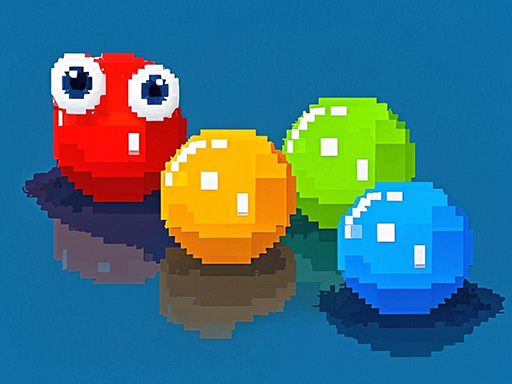
Bejeweled games are the undisputed royalty of the match-three world, having single-handedly turned the simple act of swapping gems into a global obsession. This is the genre that proved you don't need a complex backstory or a massive open world to lose three hours of your life; you just need a grid, some shiny objects, and a satisfying "clink" sound when things line up. While the original started as a simple browser game called Diamond Mine, it evolved into a multi-billion dollar blueprint for almost every puzzle game you see today. It is the perfect loop: you scan the board, you make a move, you trigger a cascade, and you watch the score climb while your brain rewards you with a tiny spark of joy. It is simple, it is elegant, and it is the ultimate digital distraction for anyone with a pulse and a mouse.
What You Will Match
You are not just swapping rocks; you are looking for specific configurations that turn the board from a static grid into a fireworks display.
-
Classic Match-Threes: The bread and butter of the genre where you swap two adjacent jewels to create a line.
-
Flame Gems: Created by matching four in a row, these little firecrackers explode and take out the surrounding eight tiles.
-
Star Gems: Formed by matching gems in an "L" or "T" shape, these clear out entire rows and columns with a burst of lightning.
-
Hypercubes: The holy grail of gems, made by matching five in a row. Swap it with any jewel to vaporize every single gem of that color on the board.
-
Supernova Gems: Rare and terrifyingly powerful, these are made by matching six or more in a row and they effectively clear the entire screen.
-
Specialized Modes: From digging through dirt in "Diamond Mine" to saving insects in "Butterfly Mode," the gems are just the beginning.
How To Spot a Quality Grid
Not every game with a bunch of jewels is worth your time. Here is how to pick the best ones before you start clicking.
-
Check the Cascade Physics: When gems fall, do they feel heavy and responsive, or do they float like feathers? The "thud" matters.
-
Evaluate the Sound Design: You are going to hear the same five sounds thousands of times. If the matching sound doesn't sound like actual crystal clinking, it will drive you crazy within ten minutes.
-
Look for Time Options: Sometimes you want the panic of a one-minute "Blitz" mode; other times you want a "Zen" mode where you can't actually lose. Make sure the game offers both.
-
Inspect the Special Effects: A good match-three should feel like a reward. If matching five gems doesn't result in a screen-shaking explosion of light, you are playing the wrong version.
Chill vs. Challenge
You can use these games to reach a state of meditative bliss or to test the limits of your peripheral vision and reaction speed.
For the Chill Seekers: Stick to "Zen" or "Endless" modes. These are the digital equivalent of a spinning top or a zen garden. There are no timers, no "no more moves" screens, and no pressure. You can even find versions that include ambient nature sounds or breathing exercises built into the UI. It is about the rhythm of the match and the visual satisfaction of the gems falling. This is where you go when you want to turn off the noise of the real world and just exist in a vacuum of sparkling geometry.
For the High-Score Hunters: Head for "Lightning" or "Blitz" modes. You have sixty seconds to prove your worth. Here, you aren't just looking for one match; you are looking for the next three matches while the first one is still falling. You need to chain combos together to increase your multiplier and trigger "Blazing Speed," where every match explodes automatically. It is a frantic, high-intensity sprint that will leave your eyes dry and your heart racing. If you aren't sweating, you aren't doing it right.
Play Smart Tips
I have been clearing boards since the early 2000s, so listen to these veteran strategies before you make your next move.
-
Work From the Bottom: Matching at the top only changes a few gems. Matching at the bottom shifts the entire board, which increases your chances of a "cascade" where the game plays itself for a few seconds.
-
Scan the Whole Board: Beginners focus on the middle. Pros use their peripheral vision to find matches on the edges while they are busy clicking in the center.
-
Hoard Your Hypercubes: Don't just use a Hypercube the second you get it. Wait until the board is cluttered with a specific color that is blocking your progress, then clear them all out to reset the board.
-
Listen for the Clue: Most games will give you a "hint" if you wait too long. Don't feel bad about using it, but remember that the hint is usually the worst move possible. It is a trap meant to keep you moving, not to help you win.
Frequent Gem Questions
Q: Is Bejeweled just luck? A: Luck determines which gems fall, but skill determines what you do with them. A good player can turn a terrible board into a high-score run by creating special gems and managing the flow of the cascades.
Q: What is the difference between Bejeweled and Candy Crush? A: Candy Crush added levels, blockers, and "lives" to the formula. Bejeweled is the "pure" version of the mechanic, usually focusing on high scores and endless play rather than an infinite map of candy-themed levels.
Q: Why can't I make a match? A: Sometimes the board truly runs out of moves. In most modern versions, the game will automatically reshuffle the jewels so you can keep playing. If it doesn't, you just got "Game Over" the old-fashioned way.
Q: Can I play these for free? A: Almost always. There are thousands of "match-three" clones available in browsers and on mobile. Just be wary of the ones that stop you from playing every ten minutes to show you an ad for a different gem game.
Q: Why are five-gem matches so hard to get? A: Because they are the most powerful move in the game. You have to actively "set up" a five-gem match by moving specific colors into place over several turns. It is the closest this genre gets to actual chess.