




















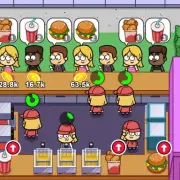
Cooking Games
If you have ever felt more stress from a digital kitchen fire than from your actual job, you have officially joined the ranks of the virtual culinary elite.


The Digital Heat
Cooking games are the only place where "playing with your food" is not only allowed but mandatory for survival. This genre has come a long way from simply flipping a pixelated burger; it has evolved into a high-stakes world of time management, creative chemistry, and occasionally, screaming at your friends because they forgot to wash the dishes. Whether you are following a grandmother’s secret recipe or managing a chaotic food truck in a zombie apocalypse, these games tap into a primal satisfaction: taking raw ingredients and turning them into something perfect. It is a world of sensory rewards, where the sizzle of a pan and the ding of a completed order provide a cleaner hit of dopamine than any real-world five-course meal.
What is on the Menu
The buffet of cooking games is vast, ranging from relaxing afternoon snacks to full-blown kitchen nightmares.
-
Simulation Masterclasses: Realistic titles where you actually have to chop, sauté, and season using physics that are often uncomfortably close to the real thing.
-
Time-Management Sprints: Fast-paced dash games where success depends on your ability to click in the exact right order while a line of angry customers grows.
-
Co-op Kitchen Chaos: Multiplayer experiences designed to test the strength of your friendships through the medium of soup and fire extinguishers.
-
Narrative Delicacies: Story-driven adventures where the recipes you cook serve as a gateway into a character’s memories or a fantasy world’s lore.
-
Restaurant Tycoons: For the business-minded, focusing on the overhead, the staff, and the decor rather than just the seasoning.
-
Alchemy and Fusion: Strange sub-genres where you mix magical ingredients or weird combinations to create dishes that shouldn't exist.
How to Choose Your Station
Before you tie the apron strings, you need to know what kind of heat you can actually handle today.
-
Manual vs. Automatic: Do you want to physically move the knife to chop the onion, or do you just want to click the onion and watch it turn into slices? Know your tolerance for micromanagement.
-
The Penalty Factor: Check if the game lets you fail. Some games just give you a lower score for a burnt steak, while others shut down your entire restaurant.
-
Visual Appetizers: Some cooking games look like cartoons; others look like a high-end food blog. Pick an aesthetic that doesn't make you hungry if you are currently on a diet.
-
Control Scheme: Many of these games are better with a mouse for precision, while others are built for the frantic swiping of a touchscreen. Choose your weapon carefully.
Chill vs. Challenge
Cooking can be a meditative retreat or a frantic fight for your life, depending on which burner you turn on.
For the Chill Seekers: Look for "Cosy Cooking" or "Coffee Shop" simulators. These games emphasize atmosphere over adrenaline. The customers are patient, the music is lo-fi, and the focus is on the beauty of the craft. You can spend ten minutes perfecting the latte art or arranging garnish on a plate. These are the digital equivalent of a warm tea on a rainy day. They are about the process, the colors, and the quiet satisfaction of a job well done without a timer breathing down your neck.
For the Challenge Addicts: Dive into the "Overcooked" clones or high-speed restaurant dashes. These games are built to overwhelm you. They introduce obstacles like moving floorboards, rats that steal your ingredients, and kitchens that literally split in half. You will need to develop a mental map of your "mise en place" and coordinate with your teammates like a tactical strike team. If you don't end your session with a slight headache and a deep respect for actual line cooks, you weren't playing hard enough.
Play Smart Tips
I have burnt more virtual kitchens than I care to admit, so take these pro tips and save yourself the insurance claim.
-
Prep is Everything: If the game allows it, always have ingredients chopped and ready before the first customer walks in. In the kitchen, time is the only currency that matters.
-
Multitask the Long Slower: Start the dishes that take the longest (like soups or roasts) first. You can always chop a salad while the steak is searing, but you can't make a slow-cooker go faster.
-
Clean as You Go: A cluttered workspace is the fastest way to lose a match. If you have a split second of downtime, clear the counters or wash a plate.
-
Listen to the Audio: Most cooking games use "sizzle" or "beep" cues to tell you when food is ready before the visual warning appears. Trust your ears; they are faster than your eyes.
Kitchen FAQs
Q: Will these games actually teach me how to cook? A: They might teach you the steps of a recipe or the importance of timing, but they won't teach you how to handle a real knife. Use them for inspiration, but maybe keep a real fire extinguisher nearby if you try to recreate the "specialty" dishes at home.
Q: Why do the customers get angry so fast? A: Because that is the primary mechanic of the genre. If customers were patient, it wouldn't be a game; it would be a charity. Their impatience is just a timer with a face.
Q: What is "Mise en Place"? A: It is a French culinary term meaning "everything in its place." In gaming terms, it means keep your onions near the cutting board and your plates near the stove. Organization is the secret to a high score.
Q: Do I need a team for the multiplayer ones? A: You can try them solo, but it is like playing a drum kit with one hand. These games are balanced for communication. If you play solo, prepare for a steep increase in difficulty.
Q: Why can't I just buy the best stove immediately? A: Because "Progression" is the carrot on the stick. If you had the industrial-grade oven on level one, you would be bored by level five. Embrace the struggle of the rusty hotplate.