





















.IO Games
If you’ve ever been eaten by a giant colorful blob while minding your own business in a browser tab, you’ve officially been initiated into the world of .io games.
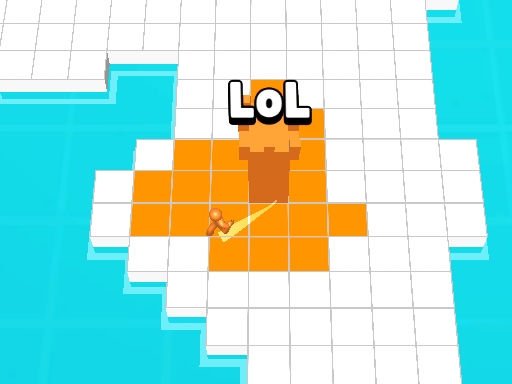
The Survival Sandbox
.io games are the ultimate digital ecosystem where the rules of nature—specifically "the big eat the small"—are enforced by strangers from across the globe. Characterized by their simple graphics and instant accessibility, these games stripped away the barrier between clicking a link and entering a massive multiplayer arena. There are no lobbies, no long load times, and certainly no mercy. You spawn, you grow, and you try to climb a leaderboard that is constantly shifting as players are devoured or disconnected. It is a genre built on the thrill of the infinite loop: you are either the predator or the snack, and the transition between the two usually happens in the blink of an eye.
What You Will Encounter
The .io landscape is a vast territory of simple shapes with very complex survival instincts.
-
Mass-Based Eaters: The classic experience of moving a circle or a square around a grid, eating tiny dots to grow larger while avoiding anyone bigger than you.
-
Worm and Snake Clones: Navigating a growing tail through a crowded field where touching another player's body means instant death and a feast for everyone else.
-
Territory Grabbers: Using your trail to "color in" parts of the map, trying to expand your empire without someone cutting your line while you are outside your zone.
-
Browser-Based Shooters: Fast-paced, top-down or first-person combat where you level up your weapon or tank by destroying obstacles and rivals.
-
Survival Crafters: Building primitive bases and gathering resources in a shared world where other players are just as dangerous as the monsters.
-
Team-Based Arenas: Specialized games that divide the lobby into colors, forcing you to coordinate with strangers to conquer the center of the map.
How To Survive The First Minute
Entering an .io game is like jumping into a shark tank with a steak tied to your waist. Here is how to last longer than ten seconds.
-
Check the Leaderboard: Look at the size of the top player. If they own half the map, you might want to find a corner of the screen where they aren't looking.
-
Assess the Lag: These games run in your browser. If your character is stuttering, do not engage in a fight. You will lose to physics before you lose to skill.
-
Identify the "Safe" Zones: Most games have a logic to their maps. Find the edges or the obstacle-heavy areas where the "giants" have a harder time maneuvering.
-
Watch for Trolls: Many .io games allow for "teaming." If you see two players moving in sync, stay far away; they are likely hunting together.
Chill vs. Challenge
You can use .io games as a meditative background activity or a high-stakes competitive sport.
For the Chill Seekers: Stick to the "Growth" simulators like the original Agar.io or Slither.io during off-peak hours. There is a weird, hypnotic peace in wandering a vast, empty grid, vacuuming up colorful dots and watching your character slowly expand. When you don't care about the leaderboard, these games become a low-stakes exercise in spatial awareness and patience. It is a digital "Zen Garden" where the only task is to exist and grow at your own pace.
For the Competitive Sharks: Head for the .io shooters like Krunker or the tactical territory games like Paper.io. These require constant focus, high actions-per-minute, and a ruthless mindset. You aren't just growing; you are actively hunting. You have to balance the risk of expansion with the necessity of defense. One mistake, one over-extended line, or one missed shot means you are back to being a tiny "Level 1" nobody. This is for the players who want the rush of being the "King of the Hill" for as long as their luck holds out.
Play Smart Tips
I’ve been a giant worm and a tiny cell more times than I can count, so take these survival tips to heart.
-
Don't Be Greedy: The fastest way to die in an .io game is to chase a "big prize" into a crowded area. Slow, steady growth is always safer than a risky grab.
-
Use the Map Edges: Giants hate the edges of the map because it limits their movement. If you are small, the border is your best friend and your primary shield.
-
Bait Your Enemies: In snake-style games, pretend to be heading one way and then sharply turn. People love to try and "cut off" smaller players, making them prone to crashing into you if you are unpredictable.
-
Accept the Reset: You are going to die. A lot. The beauty of the .io genre is that you can be back in the game three seconds after a "Game Over." Don't get attached to your size; it is always temporary.
Frequent .io Inquiries
Q: Why is it called ".io"? A: It was originally just a popular top-level domain for the British Indian Ocean Territory that developers used because it was short, catchy, and felt "techy." Now, it is just shorthand for "simple web-based multiplayer game."
Q: Do I need to create an account? A: Almost never. Most .io games let you play as a "Guest." You only need an account if you want to save your "skins," track your long-term stats, or level up your profile over time.
Q: Are the other players actually people? A: Usually, but some smaller games use "bots" to fill out the lobby so it doesn't feel empty. You can usually tell a bot by its perfectly robotic movement or its very generic name like "Player123."
Q: Can I play .io games on my phone? A: Yes, many have dedicated apps or are optimized for mobile browsers. However, be aware that touch controls can be less precise than a mouse and keyboard in a fast-paced shooter.
Q: Why do I keep getting disconnected? A: Browser games are sensitive to internet fluctuations. If your connection drops for even a second, the game might kick you. Try closing other tabs or moving closer to your router.