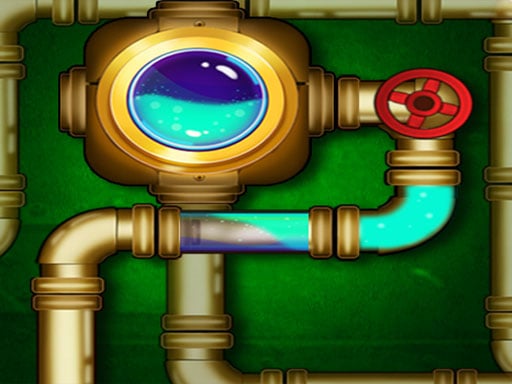
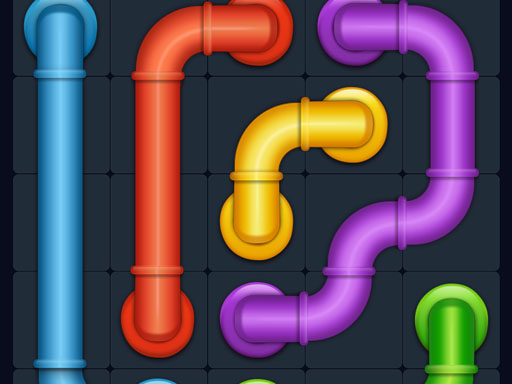
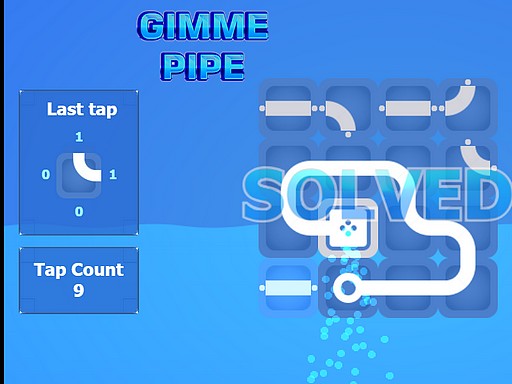
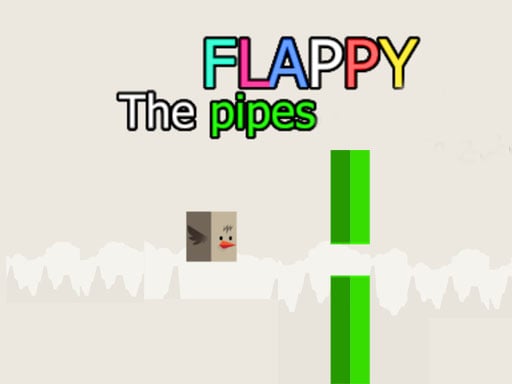
Pipe games test the player's ability to arrange components to achieve a continuous flow. The genre typically involves manipulating grid-based elements to connect endpoints successfully. These games often rely on spatial reasoning and careful planning to avoid dead ends. A common objective in pipe connection games is to complete the network before resources run out.
Last Updated:
The Basics: Pipe games
Often, the core mechanic involves rotating and placing pieces to guide a fluid or signal from a start point to an end point. Players must immediately assess the grid layout and execute moves to prevent leaks or blockages. The action requires precise placement and quick thinking to maintain momentum. Success depends on adapting to the random distribution of available segments.
Gameplay Loop
The primary objective is to construct a functional pipeline within a limited grid space using available pieces. Players typically click or tap to rotate individual segments, then drag or click to place them into the empty slots on the board. The loop continues until the path is fully connected or the move limit is reached, demanding constant evaluation of the current board state. This cycle of pipeline puzzle games focuses on efficiency and foresight. Maintaining flow in water pipe games requires avoiding closed loops that trap the substance. The process repeats as new pieces are added, challenging the player to optimize the layout under pressure.
Winning Tactics
Start by identifying the start and end points to establish a general direction for the flow. Prioritize connecting major branches early to create a stable framework for the remaining pieces. Adjust your strategy based on the specific shapes of the pieces you draw, ensuring they fit the current gaps. Remember that plumbing puzzle games reward patience over rushed placement. Avoid forcing pieces into spots that disrupt the overall path structure. Use the grid's boundaries to guide the flow naturally toward the destination.
Common Questions: Pipe
Q: What are the typical controls? A: The controls usually involve clicking to select and rotate pieces, then clicking again to place them on the grid. Q: What is the main objective? A: The goal is to connect the start point to the end point using the available pipe segments. Q: Is there a time limit? A: Not stated, but many games restrict moves or provide a limited number of pieces to place. Q: What is the core mechanic? A: The core mechanic is arranging and rotating grid pieces to form a continuous, unbroken path.