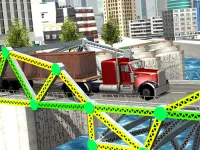
Bridge games challenge players to construct pathways across gaps using limited resources. They focus on structural integrity and efficient material usage to span obstacles. The genre demands precise placement and planning to create a stable crossing. Players often engage with bridge construction games to test their engineering logic.
Last Updated:
The Basics: Bridge games
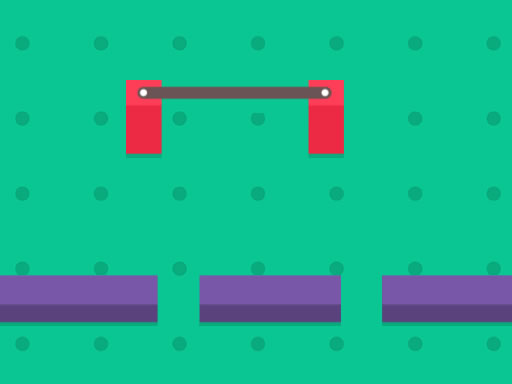
Players must connect two points over a void using beams and cables, Immediately assessing load distribution and anchor points to ensure the structure holds weight.
Gameplay Loop
The core loop involves analyzing the gap, selecting materials from a budget, and placing components to form a stable structure. Players then simulate the crossing to test if vehicles or characters can safely traverse the span without collapse. Success requires balancing cost against durability, often leading to iterative adjustments where inefficient designs are scrapped and new approaches are tried in physics bridge games. Subsequent attempts refine the design to handle heavier loads or wider gaps, focusing on efficient resource allocation in engineering puzzle games.
Winning Tactics
Prioritize triangular shapes for maximum stability with minimal material usage. Distribute tension and compression forces evenly across all connected points. Remember that overbuilding wastes budget while underbuilding causes failure. Test the design with incremental weight before final submission.
Common Questions: Bridge
Q: What are the typical controls? A: Controls are not stated but usually involve placing beams and cables. Q: What is the main objective? A: The objective is to build a bridge that supports weight over a gap. Q: Is there a budget system? A: Not stated, but most games limit material usage. Q: What is the primary mechanic? A: The mechanic is structural engineering and load management.