


Shadow Adventure Guide: Read Obstacles, Plan Jumps and Recover Calmly
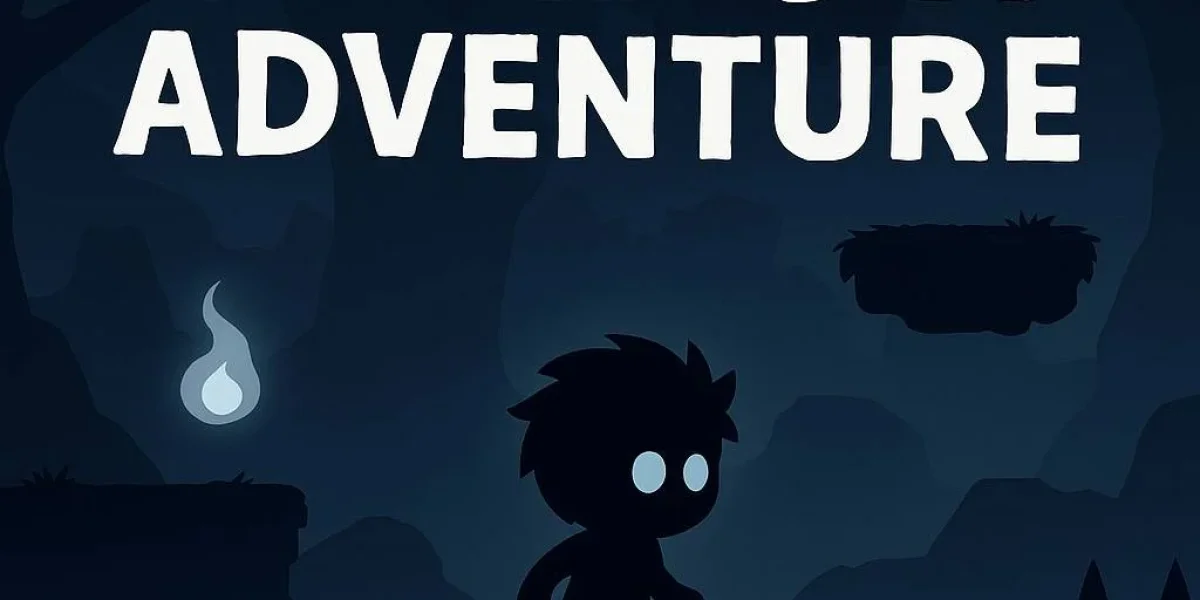
The most important part of a jump often happens before the character leaves the ground. In Shadow Adventure, the dark setting and moving obstacles can encourage rushed decisions, but a hurried input does not make an uncertain landing safer. A better approach is to read the available space, identify the next manageable movement, and understand what went wrong when an attempt fails. This guide develops that approach without promising a secret route or a universal timing trick.
Open Shadow Adventure and use the instructions presented by the game. The loaded project identifies itself as Shadow Adventure and centers on movement, jumping, and obstacle avoidance. Learn the response of its actual controls before relying on advice from another similarly named game. A title containing the word shadow does not mean two games share the same movement, objectives, or input scheme.
Establish a reliable movement reference
Begin by testing a short movement and a single jump in the safest space currently available. Observe the horizontal travel, the height, and the time before the character returns to a surface. You do not need numerical measurements. You need a visual reference that lets you compare the next obstacle with a movement you already understand. Without that reference, every gap can feel like a completely new guess.
Repeat a similar input and check whether the result is consistent. If it differs, consider the starting position and any movement already in progress. A jump begun while moving may not resemble one begun from a different state. Avoid immediately assuming that the controls are unreliable. First identify whether you actually repeated the same conditions. Consistency becomes easier to judge when you pay attention to the moments before the input.
Look for the next landing, not just the next obstacle
An obstacle draws attention because it looks dangerous. The landing area deserves equal attention because it determines whether clearing the obstacle is useful. Before committing, identify where you expect the character to arrive and what movement will be needed there. A jump can clear the immediate threat while leaving you without enough room to respond to the following one.
This is especially important when several objects occupy a small area. Treat the movement as a short route rather than a single dramatic leap. Where can you regain control? Where is the next safe decision point? Do not assume every surface is safe merely because it looks reachable. Observe what the current game demonstrates and revise the route if contact behaves differently from your expectation.
Read motion before choosing a moment
Moving obstacles create a timing problem as well as a distance problem. Watch the direction they are traveling and whether that movement is opening or closing the space you need. A gap that is large enough now may be smaller by the time you arrive. Conversely, a route that appears blocked can become more manageable after the obstacle moves through part of its cycle.
You do not need to wait for a perfect mental model of every motion. Look for one repeatable opportunity and test it. If the attempt fails, note whether you started too early, too late, or from the wrong position. These observations suggest different corrections. Repeating the same input immediately without identifying the cause can reproduce the failure while making it feel increasingly mysterious.
Separate takeoff mistakes from landing mistakes
When a jump fails, identify where the plan first broke down. If the character collides before reaching the main gap, the takeoff position or initial timing may need attention. If the obstacle is cleared but the landing fails, the problem lies later in the route. Studying only the final fall can hide an earlier decision that already made the attempt difficult to save.
Try changing one part of the setup. A small positional change can answer a different question from a timing change. Keep the rest of the attempt as similar as possible so the result remains informative. The aim is not to produce identical play forever. It is to make each retry explain something, allowing you to retain a useful lesson rather than replacing one guess with another.
Keep the screen readable under pressure
A dark visual theme can make overlapping movement harder to interpret. Focus on the edges that matter to the next action: the character's position, the obstacle's travel, and the surface you intend to reach. Avoid trying to process every decorative element at the same level of attention. A practical visual hierarchy helps you notice the information that changes your immediate decision.
If the action becomes crowded, shorten your planning horizon. Choose the next safe movement rather than imagining a long sequence you cannot yet execute reliably. This does not mean ignoring what comes afterwards. It means preserving a manageable amount of information while still checking that the next landing leaves options. As familiarity improves, you can extend the route you plan without turning it into a rigid script.
Do not turn one mistake into several
A poor approach can tempt you to add more inputs in the hope that something will work. Sometimes a correction is possible, but random extra actions make it harder to understand the result. If you can still move to a safer position, choose that movement deliberately. If the attempt is already lost, use the remaining moment to notice the cause rather than obscuring it with a frantic sequence.
After restarting, return to a stable reference. You do not need to rush the opening simply because the previous attempt ended badly. Repeating the early section carelessly can introduce new mistakes before you reach the part you wanted to practice. A calm restart protects the progress you have already made in understanding the route and leaves more attention available for the unresolved problem.
Judge optional opportunities by their risk
When the current play presents a tempting extra object or route, compare it with the primary task of staying in control. Do not assume every detour is necessary or that every apparent reward justifies the same risk. First understand what the game actually asks you to do. Avoid importing a collectible checklist, power-up effect, or completion rule from an unrelated platform game.
If an optional route repeatedly disrupts an otherwise manageable section, establish the safer movement first. You can then investigate the detour from a known starting point. This gives you a clearer comparison between the two choices. The goal is not to avoid experimentation; it is to keep experimentation informative, with a specific question and a reasonable understanding of what a failed attempt will teach.
Build a useful practice sequence
Choose one movement problem for several attempts. You might work on leaving a platform from a consistent position, recognizing an obstacle's travel direction, or reaching a landing with enough room for the next action. A narrow target makes improvement visible. If you change the goal after every failure, it becomes difficult to tell whether the original problem is actually getting easier.
Give yourself a brief review between attempts. Describe the most useful fact you learned in plain language: the start was too close to the edge, the obstacle was moving into the route, or the landing left too little room. The statement should lead to a practical change. Vague conclusions such as needing better reflexes rarely tell you what to do differently on the next attempt.
Notice the difference between a plan and a memorized script
A memorized sequence can help when the conditions repeat, but it becomes fragile when the starting position changes. A plan describes why each action is useful and can adapt to that change. Instead of remembering only that a jump happens after a certain moment, identify the visible cue that makes the jump appropriate. The cue is what helps you recover when the preceding movement was slightly different.
For example, you might wait until a moving threat has passed the space you need, then begin the crossing. That is more adaptable than pressing jump after an arbitrary count that no longer matches the screen. Use the game's visible state as your reference. Where a fixed sequence genuinely works, retain it, but understand the conditions under which it remains dependable.
Check focus before blaming timing
Keyboard input can go to the surrounding page when the game player does not have focus. If the character does not respond, first ensure the player is active and that you are following the displayed controls. Repeatedly pressing a key while the page scrolls will not reveal anything useful about the jump. An input problem and a movement-planning problem require different responses.
Likewise, allow the game to finish loading before evaluating its responsiveness. Do not interpret a loading interruption as a gameplay rule. If an input or display issue persists, preserve what you observed rather than inventing a tactical explanation. Useful practice depends on being able to connect an intended action to a visible response. When that connection is missing, diagnose it before continuing to refine the route.
Choose related games by the decision they exercise
The site's Puzzle Games collection offers other observation-led challenges. Shadow Adventure adds real-time movement to that kind of decision-making. A puzzle may let you reconsider before committing; a jump requires you to prepare and then act while the situation continues. The transferable habit is reading the problem carefully, while the execution needs to be learned for this particular game.
End a session by identifying one decision that has become clearer. Perhaps you now recognize an unsafe landing, wait for a more useful obstacle position, or restart without rushing. Those are meaningful improvements even when the final score is inconsistent. A dependable movement habit grows from specific observations and controlled adjustments, not from pretending that every failure has the same cause or that one successful leap solves every future obstacle.